

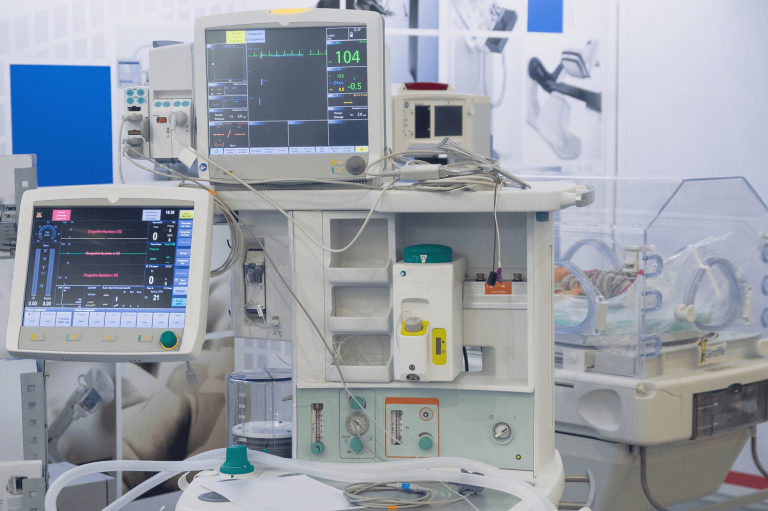
A major shift is happening in the global healthcare market in 2025. Clinics, diagnostic centers, and hospitals across the world are rushing to secure pre-owned medical equipment — and the demand is rising faster than supply.
While new equipment remains essential, global shortages, long delivery times, and rising costs have pushed healthcare providers to adopt pre-owned devices as their fastest and most cost-effective solution.
Below is a breakdown of why the pre-owned market is exploding in 2025.
1. Global Delays in Manufacturing and Delivery
Manufacturers are currently facing component shortages, production delays, and longer shipping timelines.
New ultrasound machines, lab analyzers, and imaging systems that once took weeks now take 3–9 months to arrive.
Clinics can’t afford downtime, so the only practical option is to buy verified pre-owned equipment that is available immediately.
2. Growing Patient Load Across Developing Regions
Countries in Africa, the Middle East, and Asia are experiencing increased demand for diagnostic services.
More patients mean clinics need to expand faster — and that requires equipment now, not months later.
Pre-owned systems allow new and growing facilities to start serving patients without delay.
3. Tighter Budgets and Higher Costs
Healthcare budgets remain under pressure worldwide.
With inflation rising and funding stretched thin, many facilities are looking for alternatives to expensive brand-new devices.
Pre-owned equipment, often priced 40–75% lower, allows them to upgrade or expand without financial strain.
4. Rapid Increase in New Clinics and Diagnostic Centers
2025 is seeing a surge in new healthcare facilities, especially in Nigeria, Ghana, Kenya, South Africa, UAE, and India.
Most new businesses prefer pre-owned equipment because:
- It reduces startup costs
- It accelerates launch time
- It allows facilities to offer more services from day one
5. Hospitals Are Liquidating Faster
Hospitals used to keep spare equipment in storage, but not anymore.
Now, facilities sell idle or backup equipment immediately to recover capital and free up space.
This creates more inventory on the used market — and buyers are moving fast to secure it.
6. Quality of Pre-Owned Equipment Has Improved
Thanks to better inspections, digital testing, and broker verification, pre-owned equipment today is far more reliable than it was a decade ago.
Most reputable brokers now provide:
- Performance test videos
- Condition reports
- Serial number verification
- Usage logs
- Export-ready packaging
This boosts buyer confidence and speeds up purchase decisions.
7. Faster Global Shipping and Cross-Border Trade
Medical equipment can now be shipped internationally in days, not months.
With better logistics, simplified export paperwork, and lower container rates, global buyers can purchase equipment from any country with ease.
This has opened the door for more cross-border deals than ever before.
Market Predictions for 2025–2027
- Pre-owned ultrasound, endoscopy, and lab analyzers will see record demand
- More diagnostic centers will launch using 100% pre-owned equipment
- International sourcing networks will expand across the U.S., Europe, and Asia
- Verification processes will become fully digital
Final Thoughts
The 2025 shortage has changed how healthcare providers buy equipment.
Pre-owned medical devices — once seen as secondary — are now the go-to solution for clinics that need reliable equipment without long delays.
For clinics, hospitals, and resellers looking to stay ahead, this is one of the best times to secure pre-owned inventory before demand overwhelms supply.

 All products